

Why Is My Baby Waking Every Hour at Night? 6 Common Causes and What to Do
If you’re here, your baby is probably waking every hour at night, and I’m sure you’re beyond exhausted and don’t want to read a novel.
So let's jump right into the most common reasons I see babies waking every hour as a pediatric sleep consultant, how to recognize each one, and what you can do to fix it.
A baby may wake every hour because they need the same support they used to fall asleep, their daytime schedule is not developmentally appropriate, hunger or frequent snacking is contributing, they are going through a developmental leap, they are uncomfortable, or something in their sleep environment is repeatedly waking them.
Why Is My Baby Waking Every Hour?
When a baby wakes every hour, I first look at how they fall asleep, then their daytime schedule, feeding pattern, development, comfort, and sleep environment. The goal is to figure out which factor is contributing most before changing everything at once.
How they're falling asleep
Their daytime schedule
Hunger or frequent daytime snacking
Developmental leaps
Teething, illness, or discomfort
Their sleep environment
The goal isn't to guess which one it is. It's to look at the whole picture and figure out which piece of the puzzle is most likely contributing.
1. How Does Your Baby Fall Asleep?
This is almost always the first thing I look at.
If your baby falls asleep completely independently (not drowsy but awake, but fully awake), they're much less likely to wake throughout the night needing your help to get back to sleep.
However, if they're being fed, rocked, bounced, held, or relying on a pacifier they can't replace on their own, there's a good chance the support they're relying on at the beginning of the night is also the reason they're waking so frequently.
It's biologically normal for babies and adults (yes, you 🙋🏼♀️) to briefly wake between sleep cycles throughout the night. These brief arousals are thought to be an evolutionary way for our brains to check that we're safe before drifting back to sleep.
As adults, we usually roll over, adjust our pillow, and fall right back asleep without even remembering it because our brain recognizes that we're in the same place we fell asleep.
But imagine you fell asleep comfortably in your bed and woke up 45 minutes later in your front yard.
Even though you'd still be exhausted, your brain would immediately become alert because something changed.
The same thing can happen when a baby falls asleep feeding, rocking, bouncing, or being held, then briefly wakes in their crib or bassinet between sleep cycles. They naturally look for the same support they had when they first fell asleep.
What I'd check first
How does my baby usually fall asleep?
What gets them back to sleep after each wake?
Is it always the same thing?
If the answer is yes, that's likely at least part of the puzzle.
2. Is Their Schedule Appropriate?
Schedules play a huge role in sleep, especially during the first year.
I know "schedules" and "wake windows" have become almost taboo online lately, but the reality is that both overtired babies and undertired babies struggle to fall asleep and stay asleep.
The goal isn't to follow the clock perfectly.
The goal is to find the right rhythm for your baby based on their age and development.
What I'd check first
Are naps appropriate for their age?
Are wake windows too short or too long?
Is bedtime happening at a consistent time?
Is your baby taking enough total daytime sleep?
One bad nap won't ruin the night. Look for patterns over several days instead.
👉 Download our free Wake Window Roadmap™ to see how long your baby’s wake windows should be, how many naps they need by age, when nap transitions usually happen, and total daily sleep needs.
3. Could Hunger Be Contributing?
Hunger can absolutely contribute to frequent overnight wakings.
However, when a baby older than about four months is waking every single hour, true hunger is usually only part of the story.
One of the most common patterns I see is babies who are essentially snacking all day long.
Think of it like this.
If you ate a handful of Cheetos every hour all day, you'd never be hungry enough to sit down and eat a full steak dinner.
Babies can do the same thing.
If they're feeding every hour or so during the day, they may never take a full feeding. Then overnight, when there are fewer distractions, they finally take those bigger feeds.
That creates a cycle where they take more calories overnight, which makes them less hungry during the day, and the pattern continues.
What I'd check first
How often is my baby feeding during the day?
Are they taking full feeds or constantly snacking?
Are nighttime feeds significantly bigger than daytime feeds?
For most babies, I like to see feeds about every 2½ to 3 hours for breastfed babies and about 3 to 3½ hours for formula-fed babies, although every baby is different and medical needs always come first.
👉 Learn more about age-appropriate daily milk intake here: https://www.babysleepsite.com/baby-feeding/baby-feeding-chart-how-many-ounces-by-age/
4. Developmental Leaps
Sometimes sleep changes simply because your baby's brain is learning something new.
That might look like:
Learning to roll
Crawling
Pulling to stand
Walking
Babbling or talking
Separation anxiety (which commonly peaks around 8 to 10 months)
Starting daycare
Traveling
A new sibling
Potty training for older toddlers
As babies learn new skills, they love practicing them...even at 2:00 in the morning.
What I'd check first
Think back over the last week or two.
What changed?
If the waking started around the same time as a major developmental milestone, that could absolutely be contributing.
5. Teething, Illness, or Discomfort
Teething can absolutely disrupt sleep.
However, if your baby has been waking every hour for longer than about a week, it's usually not teething as the only explanation. There may be something else contributing that needs a closer look.
The same goes for illness. A stuffy nose, ear infection, constipation, eczema flare-up, reflux symptoms, or simply not feeling well can all make it harder for babies to stay asleep.
What I'd check first
Ask yourself:
Did this start suddenly?
Is my baby acting differently during the day?
Do they have a fever, congestion, vomiting, diarrhea, or other signs of illness?
Is teething the only thing that's changed?
If something feels medically different than your baby's normal, I'd start there before changing their schedule or sleep routine.
6. Is Their Sleep Environment Working for Them?
Surprisingly, this one is incredibly important. Especially for babies and toddlers.
What I'd check first
Ask yourself:
Is the room pitch black?
Is white noise playing consistently throughout the night?
Is there too much noise?
Believe it or not, I see a lot of families using a sound machine, rain sounds, lullabies, and another noise source all at the same time. More noise isn't always better.
Babies aren't as good at filtering out background noise as adults are, so too much stimulation can actually make it harder for them to stay asleep.
More noise isn't always better.
Next, check the room temperature.
The ideal room temperature for most babies is 68–72°F (20–22°C).
If they're too hot or too cold, you'll often see more frequent overnight wakings.
Also ask yourself:
Do they need a diaper change?
Are they wearing an appropriately sized sleep sack?
Is the sleep sack the correct TOG rating for the room?
As a general guide:
0.5 TOG is best for warmer rooms (75-80 degrees Fahrenheit)
1.0 TOG works well for average room temperatures (70-75 degrees Fahrenheit)
2.5 TOG is designed for cooler rooms (64-70 degrees Fahrenheit)
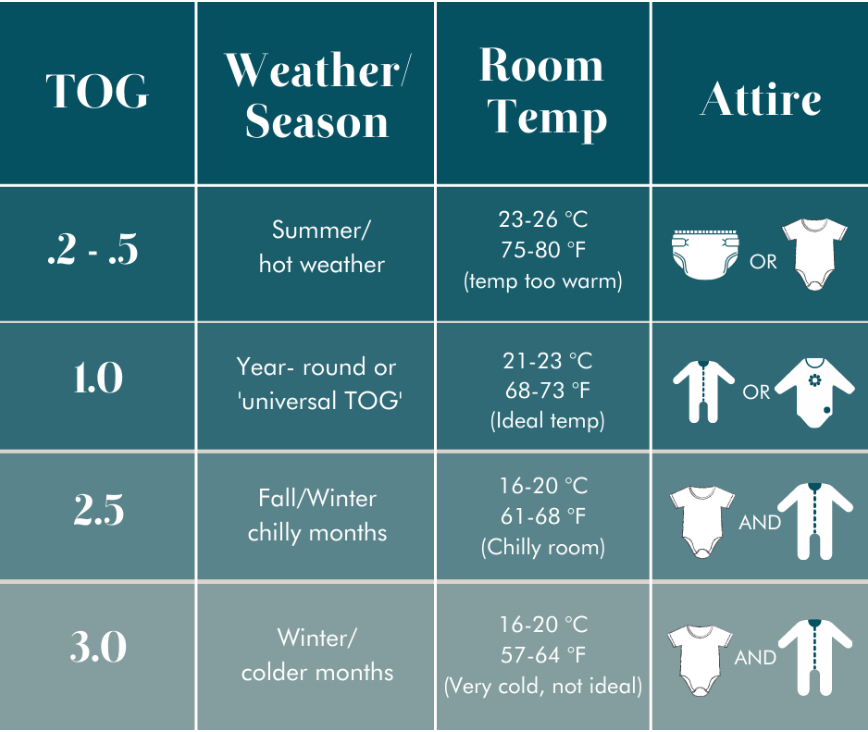
Courtesy of alittlesleep.com
Always check the manufacturer's recommendations since TOG ratings can vary slightly between brands.
One thing I also see surprisingly often is humidifiers placed right next to the crib.
Humidifiers can be incredibly helpful when babies are sick, but if they're too close (closer than 3 feet to your baby’s crib), all of that moisture can end up blowing directly into the crib. I've seen babies wake up damp because of it, and that extra moisture isn't doing their sleep any favors.
For babies under 12 months old, always keep the sleep space flat, firm, and free of pillows, blankets, bumpers, stuffed animals, sleep positioners, and other loose bedding.
Thing’s to Check First Before Changing Anything
One of the biggest mistakes I see exhausted parents make is changing five different things all at once
An earlier bedtime
Longer wake windows
Dropping a nap
Adding more feeds
Changing the bedtime routine
Buying a new sleep sack (or 5)
Buying a new, super expensive mattress or bed that can do all kinds of motions
If sleep gets better, you won't know what actually helped.
If sleep gets worse, you won't know why…
Instead, I'd work through things in this order:
How does my baby fall asleep?
Is their schedule appropriate for their age?
Could hunger or daytime snacking be contributing?
Has anything recently changed developmentally?
Could illness or discomfort be playing a role?
Is their sleep environment supporting good sleep?
Most of the time, you don't have seven different problems. You have one or two that are driving everything else.
Still Not Sure What’s Causing the Hourly Wakings?
If you read through this list and thought,
“Honestly…my baby sounds like several of these.”
You’re not alone and that’s exactly why so many parents end up feeling stuck. Generic sleep advice can only take you so far.
When sleep onset, schedule, feeding, development, and the sleep environment may all be contributing, it can be hard to know what actually needs to change first.
This is where expert-led, personalized sleep support can mean the difference between spending months trying random advice and finally having clarity on what is actually driving the wakings and how to move forward.
During a consult call, we’ll talk through what is happening with your baby’s sleep, what your goals are, and I’ll give you clarity on which type of support makes the most sense for your family.
FAQ’s
-
It depends on your baby's age. Frequent overnight wakings are much more common and expected during the newborn stage. As babies get older, waking every hour usually means there's another factor contributing, like how they're falling asleep, their schedule, feeding patterns, development, or their sleep environment.
-
Yes. Overtired babies often have a harder time falling asleep and staying asleep due to increased cortisol in their body.
Babies that are undertired can also wake every hour because they are not tired enough. This is why finding the right daytime rhythm is so important. -
For newborns, they certainly can be. For babies older than about four months, true hunger every hour is much less common. I would first look at how much they're eating during the day and whether they're taking full feeds or simply snacking.
-
If your baby waking every hour is no longer sustainable for your family, sleep training can be a wonderful option to help both you and your child get the sleep you need.
The first step is figuring out what is actually causing the frequent wakings, because the best approach will depend on your baby’s age, schedule, feeding needs, how they fall asleep, and what feels right for your family.
If you are not sure what options are available or which direction makes the most sense, scheduling a consult call with me can help point you toward the right next step.
Need Support From Other Parents Who Get It?
Sometimes you don’t need another article. You need a place to ask a quick question, share what is happening, and hear from parents who are dealing with the same kinds of sleep struggles.
Inside our Sleep Training Help for Babies, Toddlers & Big Kids Facebook Group, parents can ask questions about naps, night wakings, schedules, sleep training, regressions, and everything in between.
It is a supportive space where we can help each other, share what has worked, and make sleep feel a little less isolating.