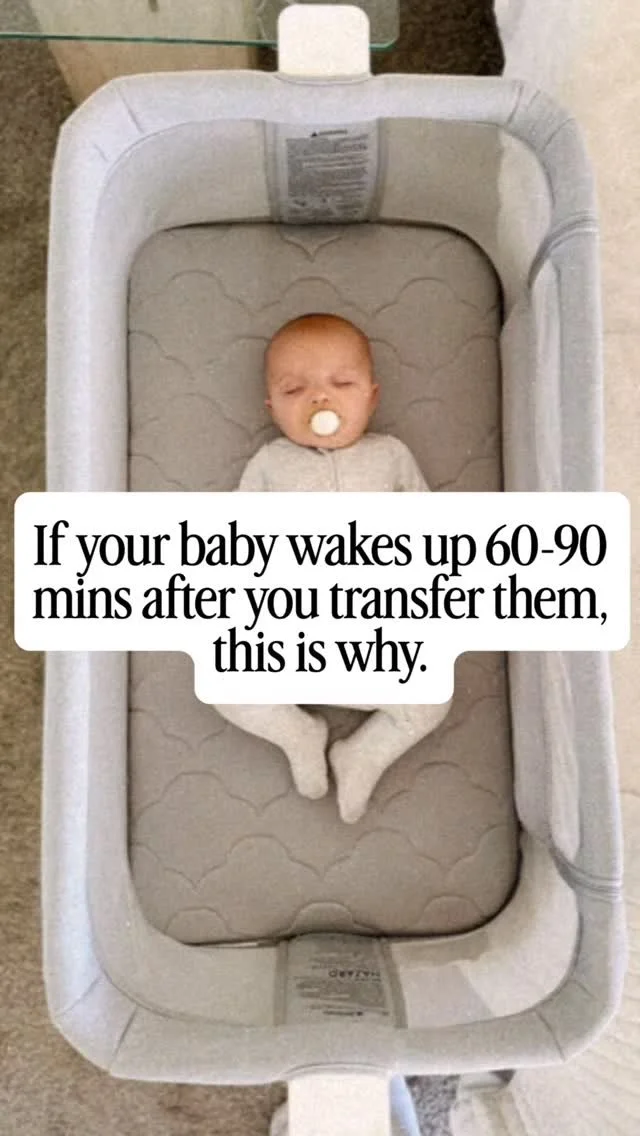

Why Is My Baby Waking Every 45 Minutes? Causes and What to Check First
If your baby is waking every 45 minutes, you may barely have enough time to fall asleep before the monitor turns on again.
That is not just “a little broken sleep.” It is exhausting. And when every article gives you a different explanation, it can feel impossible to understand what is actually happening.
The 45-minute timing may line up with your baby transitioning into lighter sleep, but the sleep cycle itself is not necessarily the problem. The real question is why your baby becomes fully awake or needs your help to fall back asleep every time that transition happens.
Throughout this blog, you’ll understand which waking pattern sounds most like your baby, what may be contributing to it, what to check first, and when frequent waking deserves a conversation with your pediatrician.
Why Does My Baby Wake Every 45 Minutes?
Babies naturally transition between lighter and deeper stages of sleep. During those transitions, they may move, grunt, briefly open their eyes, or make noise without fully waking.
Around four months, infant sleep begins becoming more organized. Babies become more aware during transitions between sleep cycles, which is often when parents notice a baby who previously slept longer stretches suddenly waking after one short cycle.
You will commonly hear that a baby’s sleep cycle lasts exactly 45 minutes. In reality, the length varies by age, baby, sleep stage, and time of night.
What matters most is not whether your baby reached exactly 45 minutes.
What matters is this:
What changed when your baby partially woke, and what do they rely on to fall back asleep?
For many babies, the answer is connected to how they fell asleep in the first place.
One of the Biggest Causes:
Your Baby Fell Asleep With Support
In my professional experience as a Certified Pediatric Sleep Consultant, one of the most common reasons babies older than four months wake after nearly every sleep cycle is that they fell asleep with some form of external support.
That support may include:
Nursing or bottle-feeding
Rocking
Bouncing
Being held
Motion
Pacifier replacement
A parent lying or sitting beside them
None of these things is inherently bad. Feeding, rocking, and holding are natural ways to comfort a baby.
They become a problem when they are no longer sustainable for your family to repeat five, six, or eight times every night.
But how does rocking or nursing your baby to sleep cause them to wake repeatedly overnight?
The Front Yard Analogy
Imagine falling asleep comfortably in your bed.
Then, about 45–90 minutes later, you open your eyes and realize you are lying in your front yard.
Even if you were still exhausted, the protective part of your brain would immediately become alert. Questions would start flooding your mind:
Where am I?
How did I get here?
What happened to my bed?
How do I get back to where I was?
That is similar to what can happen when a baby falls asleep nursing, rocking, bouncing, or in your arms and is then transferred to the crib or bassinet.
When your baby naturally transitions between sleep cycles and realizes that the movement, feeding, contact, or parent they relied on to fall asleep is no longer there, their brain notices that something has changed. They may then cry out for help recreating the conditions they associate with falling asleep.
Not because the crib or bassinet is unsafe, but because it is not where or how they remember falling asleep. They do not yet have the skills or confidence to return to sleep independently.
If your baby is older than four months and waking seemingly every 45–90 minutes, this is often one of the biggest reasons.
Why Do Independent Sleep Skills Matter?
Independent sleep does not mean leaving your baby alone with no comfort or support while they figure everything out.
It means helping your baby develop the confidence and ability to fall asleep in the same safe sleep space where they will later wake between sleep cycles.
When a baby can fall asleep without needing feeding, rocking, bouncing, or another condition recreated for them, they have a much better opportunity to transition between sleep cycles without crying out for external support.
When they briefly arouse, they are still in the same place and under the same conditions in which they initially fell asleep. Nothing unexpected has changed.
There are so many responsive ways to teach this skill. The right approach depends on your baby’s age, temperament, feeding needs, current sleep habits, and what feels realistic for your family.
Could My Baby Actually Be Hungry?
Yes. Hunger can absolutely contribute to frequent waking, especially for newborns and young infants.
During the first weeks and months, exclusively breastfed babies commonly feed every two to four hours on average, although newborns may feed as often as every one to three hours, including overnight. Formula-fed newborns commonly feed about every three to four hours.
Frequent waking to eat can therefore be completely appropriate for a young baby.
As babies get older, the picture changes.
In my professional experience:
A 4-, 5-, or even 6-month-old may still appropriately need one or two overnight feeds.
Many older babies gradually move toward one overnight feed, while others may no longer need overnight calories.
When a healthy baby is growing well and consistently taking adequate nutrition during the day, they may become capable of fully weaning from overnight feeds.
There is no single age when every baby automatically stops needing milk overnight.
Growth, milk transfer, daytime intake, prematurity, feeding method, medical history, and your pediatrician’s recommendations all matter.
Is It Hunger or a Familiar Way Back to Sleep?
Pay attention to what happens during the feed.
Ask:
Is my baby taking a complete, active feed?
Has it been an appropriate amount of time since the last feed?
Is my baby feeding effectively during the day?
Does my baby eat for less than five minutes and quickly fall back asleep?
Is my baby waking far more frequently than they would typically need calories?
Are growth and wet diapers appropriate?
For most babies older than four months, I generally begin by spacing planned overnight feeds approximately four hours apart, when their growth, daytime intake, medical history, and pediatric guidance support doing so.
A baby who wakes after several hours and takes a full, active feed may genuinely need that nutrition.
A baby who wakes every 45 minutes and nurses or drinks only long enough to fall back asleep may be using suckling primarily as their familiar path back to sleep rather than for nutritional purposes.
As a NICU and G-tube mom, I also know feeding and growth cannot always be reduced to an age chart. Babies with prematurity, swallowing difficulties, poor weight gain, airway concerns, or medically complex histories need individualized guidance before night feeds are reduced.
Not Sure Whether Your Baby Is Hungry or Using Feeding to Return to Sleep?
When feeding works every time, it can be incredibly difficult to determine whether your baby needs the calories or needs the familiar support.
During a consult call, I can help you look at your baby’s age, daytime intake, overnight feeding pattern, growth history, schedule, and how they fall asleep. Together, we can determine what your baby may genuinely need overnight and what may be keeping the waking pattern in place.
Is Your Baby’s Schedule Contributing?
A baby can have independent sleep skills and still wake frequently if their schedule does not create the right balance of sleep and awake time.
Too little awake time can mean your baby does not have enough sleep pressure to take a longer nap or settle into consolidated nighttime sleep.
Too much awake time can leave your baby overtired, dysregulated, and more likely to experience short naps, bedtime false starts, and fragmented sleep.
The goal is not to keep your baby awake as long as possible.
The goal is to find the right balance between:
Age-appropriate awake time
The correct number of naps
Enough daytime sleep
Enough sleep pressure before bedtime
A consistent morning wake time and bedtime
Signs Your Baby May Need More Awake Time
Your baby may be under-tired if they regularly:
Take a long time to fall asleep
Seem happy and playful at bedtime
Wake after a short period ready to interact
Stay awake for long periods overnight
Take more daytime sleep than they currently need
Signs Your Baby May Need Less Awake Time
Your baby may be overtired if they regularly:
Become very upset before sleep
Fight sleep despite appearing exhausted
Take short, unsettled naps
Wake shortly after bedtime
Become increasingly difficult to settle as the night continues
One sign alone does not give you the answer. Look at the entire day, not one wake window or one difficult nap.
Not Sure Whether Your Baby’s Schedule Is Age-Appropriate?
Download our Wake Window Roadmap™ for age-appropriate starting points for wake windows, naps, and sleep timing.
It can help you identify whether your baby may need more awake time, less awake time, or a better balance across the day.
Could Development Be Causing the Waking?
Development can absolutely disrupt sleep temporarily.
Your baby may suddenly begin:
Rolling repeatedly
Sitting or crawling
Pulling to stand
Babbling in the crib
Becoming more aware when you leave
Showing stronger separation anxiety
A new skill can make sleep temporarily more active, but I would not automatically blame months of waking every 45 minutes on a “regression.”
Development may intensify an existing sleep issue.
For example, a baby who already depends on a pacifier, feeding, or rocking may begin waking even more frequently while learning a new motor skill.
Ask yourself:
Did this begin suddenly when something changed, or has my baby always needed support after every sleep cycle?
That distinction matters.
Could My Baby Be Uncomfortable or Unwell?
A baby who previously slept longer stretches and suddenly begins waking frequently should be checked for discomfort or illness before the pattern is treated only as a sleep issue.
Talk with your pediatrician if frequent waking happens alongside:
Fever or illness
Significant congestion
Feeding refusal
Painful arching
Repeated vomiting
Coughing or choking during feeds
Poor growth
Fewer wet diapers
Persistent itching or eczema
Regular snoring
Gasping or pauses in breathing
Persistent mouth breathing
Unusual noisy or labored breathing
Seek urgent medical care for difficulty breathing, blue or gray skin or lips, unresponsiveness, or unusual difficulty waking your baby.
Regardless of why your baby is waking, continue placing them on their back on a firm, flat, level sleep surface with a fitted sheet only. Keep pillows, blankets, bumpers, toys, positioners, wedges, and weighted products out of an infant’s sleep space.
What Should You Check First?
You do not need to diagnose 20 possible causes tonight.
Start with these four questions:
1. How Does Your Baby Fall Asleep?
Does your baby fall asleep independently in the crib, or while feeding, rocking, bouncing, being held, or using a pacifier they cannot replace?
If your baby needs the same support after nearly every waking, that is a strong clue.
2. Is Your Baby Taking Complete Overnight Feeds?
Consider your baby’s age, daytime intake, growth, and whether the feed appears nutritional or is primarily a quick path back to sleep.
3. Is Your Baby on an Age-Appropriate Schedule?
Look at the number of naps, total daytime sleep, wake windows, bedtime, and how your baby behaves before sleep.
4. Did Something Suddenly Change?
Consider illness, a developmental milestone, daycare, travel, a nap transition, feeding changes, or a new sleep environment.
These questions will usually give you more clarity than focusing only on the 45-minute number.
What I Look at When a Baby Wakes Every 45 Minutes
When a family comes to me with this pattern, I look at the entire sleep picture:
Age and development
Daytime and nighttime feeding
Nap schedule
Total daytime sleep
Wake windows
Bedtime
How the baby falls asleep
What happens after each waking
Pacifier use
Recent changes
Medical and feeding history
What the parents have already tried
Two babies can wake at the exact same interval and need completely different plans.
One baby may need to develop independent sleep skills. Another may genuinely need an overnight feed. Another may be getting too much or too little daytime sleep. Another may have a developmental change layered on top of an existing sleep pattern.
That is why generic advice and random tips online can only take you so far.
If Sleep Feels Confusing in Your House, I Can Help
If naps are short and unpredictable, you’re the only way your baby can fall asleep, or your baby wakes 45 minutes after bedtime and continues waking throughout the night, I can help you figure out why and show you how to fix it!
Need Support, but Not Ready to Book a Call?
If you’re looking for a place to ask questions, share what is happening with your baby, and/or hear from other parents in a similar season of life, join our free Nite Nite Baby sleep support Facebook group.
Inside the group, you can connect with other families navigating similar challenges, get support from me, and ask the questions that come up in real time, whether they are about night wakings, schedules, or what to try next.
It is a supportive, judgment-free space where you do not have to figure everything out on your own.